Order a callback


Order a service
Order a callback
Download on the App Store

Download on the Play Market


 20.07.2018
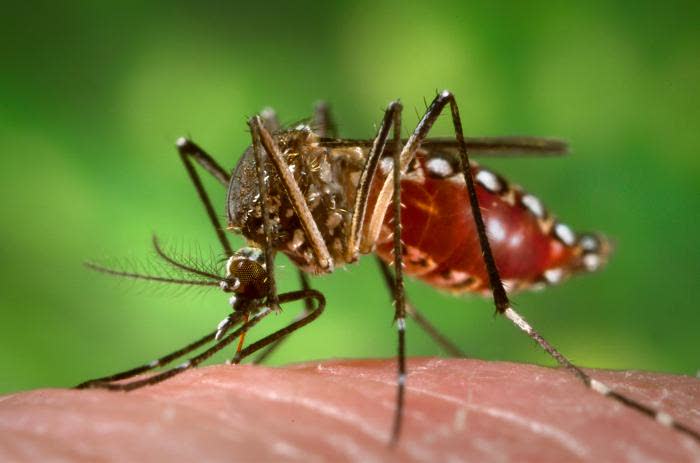
Malaria is a dangerous infectious disease caused by mosquito bites. The causative agent is the Plasmodium microbe.
Plasmodium enters the human body through the bite of an Anopheles mosquito. There are about 20 species of mosquitoes that can transmit malaria to humans. Their peculiarity is that they bite only at night. In addition, these mosquitoes reproduce in water, so the greatest risk of contracting malaria is in areas with high humidity, near water bodies, and during the rainy seasons.
There are 3 main routes of infection:
A person with malaria is not dangerous to others and cannot infect their loved ones. Infection is possible only through blood transfusion or organ transplantation from a sick person to a healthy person. The incubation period, that is, the time from infection with malaria to the appearance of the first symptoms, is from 7 to 14 days.
The first symptoms of malaria may resemble a cold.
The main symptom is an increase in body temperature to 38-39C. It lasts for several hours and is accompanied by severe chills. Then the temperature drops, which causes severe sweating, headache, nausea, vomiting, muscle pain, joint pain, weakness, drowsiness, loss of appetite, the skin becomes pale or acquires a yellowish tint.
Prevention of malaria:
The main methods of prevention are protection from insect bites that carry the disease, as well as prophylactic use of antimalarial drugs. When traveling or living in an area with a high risk of contracting malaria, follow these recommendations:
Anti-mosquito measures play a special role in malaria prevention. In this case, the season of infection transmission is determined, as well as the place where mosquitoes actively reproduce. For preventive purposes, to prevent the spread of infection, residential and non-residential premises are treated with insecticides. Mainly, we are talking about means that provide a long-term and residual effect. Reservoirs that are considered unused and unnecessary in the economic sector are treated with a bactericidal agent.
Malaria is a dangerous infectious disease caused by mosquito bites. The causative agent is the Plasmodium microbe.
Plasmodium enters the human body through the bite of a mosquito of the genus Anopheles. There are about 20 species of mosquitoes that can transmit malaria to humans. Their peculiarity is that they bite only at night. In addition, these mosquitoes reproduce in water, so the greatest risk of contracting malaria is in areas with high humidity, near water bodies, and during the rainy seasons.
There are 3 main routes of infection:
A person with malaria is not dangerous to others and cannot infect their loved ones. Infection is possible only through blood transfusion or organ transplantation from a sick person to a healthy person. The incubation period, that is, the time from infection with malaria to the appearance of the first symptoms, is from 7 to 14 days.
The first symptoms of malaria may resemble a cold.
The main symptom is an increase in body temperature to 38-39C. It lasts for several hours and is accompanied by severe chills. Then the temperature drops, which causes severe sweating, headache, nausea, vomiting, muscle pain, joint pain, weakness, drowsiness, loss of appetite, the skin becomes pale or acquires a yellowish tint.
Prevention of malaria:
The main methods of prevention are protection from insect bites that carry the disease, as well as prophylactic use of antimalarial drugs. When traveling or living in an area with a high risk of contracting malaria, follow these recommendations:
Anti-mosquito measures play a special role in malaria prevention. In this case, the season of infection transmission is determined, as well as the place where mosquitoes actively reproduce. For preventive purposes, to prevent the spread of infection, residential and non-residential premises are treated with insecticides. Mainly, we are talking about means that provide a long-term and residual effect. Reservoirs that are considered unused and unnecessary in the economic sector are treated with a bactericidal agent.
Kanet Madina Nurdauletovna
instructor-disinfector
Karatal district branch
branch of the State Enterprise on the Right of Economic Management "National Center of Expertise"
in Almaty region



 News
News  Video Gallery
  Anti-corruption policy